
Retro Games (Arcade)
Sahlaoui MustphaArcade
4.41.23K Reviews
- Version
- 1.2.2
- Installs
- 1.00M
- Age Rating
- Everyone
Screenshots
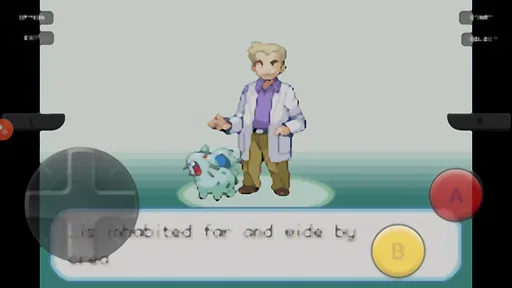
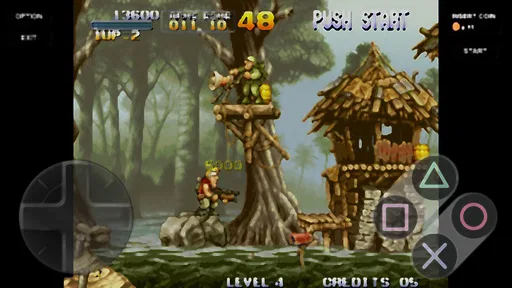
Our Review of Retro Games (Arcade)
 Analysis by Appyee
I picked up Retro Games expecting a quick arcade distraction, and that is exactly where it makes the most sense. It is a free Android arcade game from Sahlaoui Mustpha, built around the idea of bringing retro-style play into a simple mobile format. The appeal is immediate: there is no need to learn a complicated system before deciding whether you are in the mood for a short burst of play.
That simplicity is also the main thing to understand before installing it. This is not trying to replace a large modern game with a long campaign, deep character progression, or a demanding competitive scene. I see it more as a small time-filler for the moments when I want something familiar and uncomplicated. If you enjoy the direct feel of old arcade games, it has a clear reason to exist. If you need constant novelty, it may feel limited sooner than a larger game would.
Why the first few minutes matter
The strongest part of the experience is how quickly it communicates its purpose. Retro Games belongs to the arcade category, so its value depends less on a lengthy introduction and more on whether the first interaction feels inviting. I do not want to spend a spare minute navigating layers of menus when I am waiting for a bus or taking a short break. A retro-focused game has to make that decision easy: open it, understand the basic idea, and start playing.
That makes it a natural choice for people who remember arcade games as short, repeatable challenges rather than as huge adventures. The store summary describes it as an emulator for retro arcade games, and that positioning sets a useful expectation. You are approaching it for the mood and structure of classic arcade play, not for a modern open-world experience. I found that distinction important because it prevents the wrong comparison from shaping the whole review.
The game is free to download, which lowers the barrier to trying it during a spare moment. Optional purchases are listed at $3.99 per item, so anyone who prefers to keep a completely free setup should pay attention before buying anything. For me, the free entry point is the practical advantage: I can test whether the retro presentation and short-session rhythm suit me without committing money first.
Its age rating is Everyone, which also makes the overall presentation easier to approach in a shared household. I would still treat it as an arcade pastime rather than a game designed specifically for very young children, because success comes from repetition, timing, and personal patience. The label tells you the content is broadly accessible; it does not promise that every challenge will feel easy.
The developer, Sahlaoui Mustpha, has kept the concept focused rather than trying to attach a large collection of unrelated systems to it. That focus helps during the first launch. I am not looking for a story explanation or a long tutorial here. I want to see whether the game can give me a satisfying few minutes immediately, and its retro arcade identity puts that question front and center.
A good fit for the five-minute gap
My favorite use case is a short, uncertain break. Imagine waiting for a coffee order when the estimated time is too brief for a film, a long article, or a strategy game. Retro Games fits that gap because the expected commitment is small. I can play until the order is ready, stop, and move on without feeling that I have abandoned a complicated mission.
That same quality works during a commute, before an appointment, or at the end of the day when I want interaction without mental overhead. Arcade games are naturally good at creating a simple loop: try, react, improve, and try again. The pleasure comes from the next attempt rather than from reaching a distant chapter. When the timing is right, that loop feels more rewarding than a game that asks me to remember a dozen objectives.
There is a useful psychological difference between immediate pleasure and long-term progression. A role-playing game may give me more to work toward, but it also asks for more attention. This title is better when I want the reward now. I can sit down with no plan, play for a little while, and decide whether to continue based on how the current attempt feels.
That does not mean every short session will be equally satisfying. If I am already tired of repeating the same kind of challenge, the lack of a larger destination becomes more noticeable. The game works best when I actively want a classic arcade rhythm. It is less convincing when I am searching for a game that will surprise me with new mechanics every few minutes.
Interruption tolerance is part of the appeal
A mobile game earns extra value when it handles real life gracefully. In practice, short sessions are often interrupted by a message, a conversation, a train arriving, or simply the need to put the phone away. Retro Games is most useful in that environment because its basic appeal does not depend on a long uninterrupted narrative. I can approach it as a self-contained activity instead of promising myself a large block of time.
Still, I would not confuse an arcade format with a guaranteed pause system. The safest habit is to finish a current attempt before switching away whenever possible. That avoids the frustration of leaving at an awkward moment and expecting the game to preserve every detail exactly as I found it. For short-session players, this is a sensible workflow: play when you have a clear few minutes, and stop at a natural break rather than forcing a pause during action.
This is where it differs from many casual puzzle games. A puzzle title often lets me put down an individual level and return later with a clear sense of completion. Arcade play is more about maintaining a run or chasing a better result, so an interruption can break concentration even when the session itself is brief. I prefer that structure when I want quick reflexive entertainment, but I would choose a turn-based game if I expected frequent interruptions every few seconds.
The practical question is whether you need a game that remembers a long-term plan. If your ideal mobile experience is something you can open, complete a small unit, and close with a strong feeling of progress, a level-based puzzle game may be a better match. Retro Games instead offers the pleasure of returning to a familiar type of challenge. That is a narrower promise, but it is a clear one.
One tip I found useful is to treat each launch as a small session rather than as a commitment to a long play period. That mindset makes the game feel more generous. I do not judge it by whether it occupies an entire evening; I judge it by whether it gives me a pleasant few minutes and makes another attempt feel tempting.
How the replay loop holds up
Replay value is the central test for an arcade game. Without a long story to carry the experience, the reason to return has to come from the action itself, the desire to improve, or the comfort of revisiting a familiar style. Retro Games benefits from that traditional structure because a short attempt can still feel meaningful. A failed run is not necessarily wasted time if it teaches me where my attention slipped or encourages me to try a different approach next time.
The trade-off is that repetition is not hidden behind a large amount of content. If you enjoy practicing the same kind of challenge, this can be a strength. You can focus on consistency instead of constantly learning new rules. I often prefer that when I want to settle into a rhythm. But if your definition of replay value is a steady stream of new stages, characters, unlocks, or story reveals, this is probably not the right destination.
That makes the game especially suitable for players who like personal improvement. You can set your own small goals: last a little longer, react more calmly, or avoid repeating the mistake that ended the previous attempt. Those goals are modest, but they are effective in an arcade setting because the distance between failure and another try is short.
For someone who usually abandons games once the surprise disappears, I would be more cautious. The retro appeal may carry the first sessions, but nostalgia alone cannot guarantee weeks of interest. I would install it for quick entertainment and replayable arcade practice, not because I expect an extensive content roadmap.
Three ways to get more from a simple arcade game
First, use it as a reset between demanding tasks rather than as a background activity while doing something else. Arcade play depends on attention, even when the rules are easy to understand. A focused five-minute session can feel satisfying; a distracted session can feel unfair because mistakes become difficult to separate from divided attention.
Second, keep your sessions deliberately short when the game is still fresh. Stopping after a good attempt can preserve the urge to return, while pushing through frustration may make the repetition feel heavier than it is. This is a small but useful distinction: the game is better at creating a pleasant habit than at filling every free hour.
Third, compare it with the right alternatives. A current arcade release with elaborate progression may offer more variety, but it may also take longer to reach the fun. A dedicated retro collection may provide a broader historical range, but it can feel less convenient if you only want a quick mobile diversion. Retro Games sits between those choices: more focused than a large modern production, and more immediately approachable than an extensive collection that asks you to browse before playing.
That middle position is its clearest practical strength. I can recommend it to a friend who wants a free arcade-style option without making the recommendation sound like a promise of endless depth. The game is easy to understand as a purchase decision: try it for the instant retro mood, keep it if the repeated attempts stay enjoyable, and remove it if you need more variety.
What to expect from the current release
The current version is 1.2.2, and the game supports Android 6.0 or later. That makes it relevant to people using older Android phones as well as newer devices, provided the operating system meets that requirement. I appreciate that the minimum system requirement does not push the game into the category of experiences reserved for recent hardware.
Because this is a lightweight arcade concept rather than a visually demanding modern production, it is a sensible candidate for a secondary phone or an older device that still handles everyday apps comfortably. I would not buy a new phone for it, of course, but the compatibility range makes it easier to try on hardware that might struggle with larger games.
The title has reached over a million installs, with an average rating of 4.4 from around sixteen thousand ratings and roughly one thousand two hundred written reviews. Those figures suggest that the basic concept has found a sizable audience, but I would still read them in context. A popular arcade game can receive positive reactions simply because it delivers a quick, familiar experience, while your own tolerance for repetition may be very different from another player’s.
That is why I would use the rating as reassurance rather than as a substitute for personal testing. The free download makes that test straightforward. Spend a few short sessions with it, notice whether you want to replay after a disappointing attempt, and decide based on that feeling. The answer is more useful than a rating alone because replay value is intensely personal in this category.
Where it falls short for some players
The main limitation is not a technical flaw I can point to in isolation; it is the narrowness of the concept. A retro arcade emulator-style game needs to win through immediacy and repeatability. If those qualities do not appeal to you, there may not be enough surrounding structure to change your mind. Players who want a story, extensive customization, social competition, or a clear progression ladder should look toward another type of game.
There is also a difference between “easy to start” and “easy to master.” The former is a benefit here, while the latter should not be assumed. Arcade games can be welcoming at the first touch and demanding after the novelty fades. That is a good thing for players who like practice, but it can become frustrating for someone who wants every session to end with obvious progress.
Optional purchases at $3.99 per item are another point to consider. Since the game is free, I would begin without buying anything and first decide whether the core loop has earned a place on my phone. That approach keeps the decision simple and avoids paying for extras before knowing how often I will return. Anyone managing a tight app budget should use the same rule.
I would also skip it if my priority were a carefully structured game for frequent stop-and-start play where every interruption preserves a neat unit of progress. The arcade format is better for brief focused bursts than for constant multitasking. In that situation, a turn-based puzzle or a compact level-based game would likely be more comfortable.
My casual verdict after using it
Retro Games succeeds when I judge it by the things it appears designed to do: start quickly, provide a familiar arcade mood, and make another short attempt feel worthwhile. It is free, broadly accessible, and available for Android devices running version 6.0 or later. The strong install count and 4.4 average indicate that many players have found value in that straightforward formula.
I would recommend it to a friend who wants an uncomplicated retro break, especially someone who enjoys replaying a challenge instead of moving through a long campaign. It is a good companion for waiting rooms, short commutes, and those moments when I want to interact with my phone without committing to a major game.
I would not recommend it as a universal arcade solution. Players who need a large amount of variety, a deep progression system, or carefully separated levels for constant interruption should choose a different option. The repetition is the point, and that means it can either become pleasantly familiar or quickly feel too narrow.
My final advice is to approach it with the right expectation: install it for immediate retro-style amusement, not for an endless stream of new content. If a few focused attempts leave you wanting one more try, it has done its job well. If you finish the first session wishing for more systems around the action, that is a clear sign that a larger arcade collection or a more modern game would suit you better.
For my casual use, the balance is favorable. The game does not need to dominate my phone to be worthwhile. Its best quality is that it can turn a small empty space in the day into a complete little arcade session. That short-session clarity is the reason to keep it installed.
Verdict
Strengths of Retro Games (Arcade)
- Large collection of classic arcade titles in one app.
- Simple controls make most games easy to pick up.
- Nostalgic graphics and sounds recreate the arcade experience.
- Short sessions are ideal for quick entertainment.
- Many games offer challenging high-score replay value.
Limitations of Retro Games (Arcade)
- Some titles may feel repetitive after extended play.
- Touch controls can be less precise than physical arcade buttons.
- Older visuals may not appeal to players seeking modern graphics.
- Ads may interrupt gameplay in the free version.
- Game availability and features can vary by device or region.
Other Releases by Sahlaoui Mustpha
View All
Retro64 Emulator
Arcade4.3
Similar Picks in This Category
View All
Subway Surfers
SYBO Games4.6

Stickman Party 234 MiniGames
PlayMax Game Studio4.6

Subway Princess Runner
Ivy4.4

Temple Run
Imangi Studios4.2

Zombie Tsunami
Mobigame SAS4.6

Stack Ball - Crash Platforms
CASUAL AZUR GAMES4.5
Frequently Asked Questions
What is Retro Games (Arcade)?
Retro Games (Arcade) is a mobile gaming app focused on classic arcade-style entertainment. It brings together a selection of simple, fast-paced games inspired by the coin-operated machines that were popular in arcades. The experience is generally designed for short sessions, with straightforward controls, familiar gameplay concepts, and a nostalgic visual style that appeals to players who enjoy old-school gaming rather than complex modern mechanics.
Is Retro Games (Arcade) free to download and play?
The app can typically be downloaded without an upfront purchase, but the exact business model may depend on the version available for your Android or iOS device. Some content or features may include advertisements, optional purchases, or other limitations. Before installing, it is worth checking the store listing for current pricing, in-app purchase details, supported regions, and whether the app requires an internet connection for certain functions.
What kind of games and gameplay can I expect?
Players should expect short arcade-inspired challenges rather than a long story campaign or an extensive role-playing system. Gameplay may include score-based objectives, quick reflex tests, classic platforming ideas, or other simple challenges designed to be replayed repeatedly. The main appeal is usually improving your personal score, learning the controls, and trying to beat previous results instead of progressing through a highly detailed narrative.
Does Retro Games (Arcade) work offline?
Many arcade-style games can be played offline once they have been installed, which makes them convenient for travel, waiting rooms, or places with unreliable connectivity. However, features such as advertisements, leaderboards, cloud synchronization, updates, or online events may require an internet connection. We recommend launching the app once while connected and reviewing its permissions and feature behavior before relying on it offline.
Is Retro Games (Arcade) suitable for children and casual players?
Retro Games (Arcade) can be suitable for casual players because its gameplay is usually easy to understand and does not require extensive experience with mobile gaming. Nevertheless, parents should review the app’s age rating, advertising practices, purchase settings, and privacy information before allowing children to use it. Difficulty can also vary between games, so younger players may need help with controls or more challenging levels.
Play our best games!


